

We all know what it’s like to have glasses that constantly slip down your nose. Maybe you put them on just for them to pinch your ears, and by mid-afternoon, you have a headache. These small frustrations can add up quickly, but at Maple Ridge Eye Care, our team is here to make your glasses fit the way they should.
A proper fit can directly affect how clearly you see and how well your eyewear holds up over time. When your frames are fitted correctly, your lenses sit right where they need to, your nose and ears carry the weight evenly, and you can go through your day without thinking about your glasses at all.
Why a Proper Glasses Fit Matters for Your Vision and Comfort
When your glasses don’t fit right, the problem isn’t just that they feel annoying to wear. When your frames sit too high, too low, or at an angle, your lenses won’t line up quite right with your eyes the way your prescription intended. That misalignment can make your vision feel slightly off, even if your prescription itself is accurate.
Wearing frames that pinch, press, or slide can also lead to headaches, skin irritation, and sore spots around your ears and nose. Over time, you might even start wearing your glasses less just to avoid the discomfort, and that defeats the whole purpose of having them.
On top of that, properly adjusted frames tend to last longer. When you’re constantly pushing glasses back up your nose or bending the arms to keep them on, the frame material is under extra stress. Personalized attention from a trained eye care professional helps keep your frames in good shape for years to come.
How Your Face Shape Guides Frame Selection
Match Frames to Your Face Shape
Your face shape is 1 of the first things to think about when choosing a frame style. If you have an oval face, you have a lot of flexibility, because your well-balanced features mean that most frame shapes and proportions tend to look balanced on you.
Round faces tend to pair well with rectangular or square frames because those angular shapes add definition and structure to softer features. Square faces, on the other hand, often look great with rounded or oval-shaped frames, which soften the stronger angles of the jaw and forehead. Knowing your face shape before you start trying on frames can help guide you toward frames that will look great on you.
A Simple Rule for Frame Choice
A straightforward way to think about frame selection is to choose shapes that contrast with your natural face shape rather than repeat it. So if you have a round face, get angular frames. If you have an angular face, try softer frames. This contrast creates visual balance and helps your features look harmonious.
That said, face shape is just a general guideline. The frame width, the lens depth, and even the colour can all affect how a pair of glasses looks and feels on your face. Try on several styles before making a decision, and remember that when you feel good, you look good.
How Glasses Should Sit on Your Nose and Ears
The Nose Bridge Fit
The nose bridge is 1 of the most important fit points on any pair of glasses. Your frames should rest gently and securely on your nose without slipping down or digging in. If the arch of the bridge is too narrow for your nose, the frames can ride up too high and throw off your lens alignment.
If the bridge arch is too wide, the frames can slide down toward the tip of your nose, which means you’re looking through the wrong part of your lenses. Both of these problems are common and worth addressing sooner rather than later. A small adjustment can make a noticeable difference in how your glasses feel and perform throughout the day.
Nose Pad Adjustment Tips
Many frames come with adjustable nose pads, and getting those pads set correctly is key to a good fit. If the pads are pressing too firmly against your skin, you’ll notice red marks or indentations by the end of the day. That kind of pressure is a clear sign the pads need to be widened slightly.
On the flip side, if the pads are too loose or too far apart, your glasses won’t stay in place and will slide off with even a small head movement. Our opticians in Maple Ridge can adjust your nose pads so that your frames stay in place without leaving marks or causing discomfort.
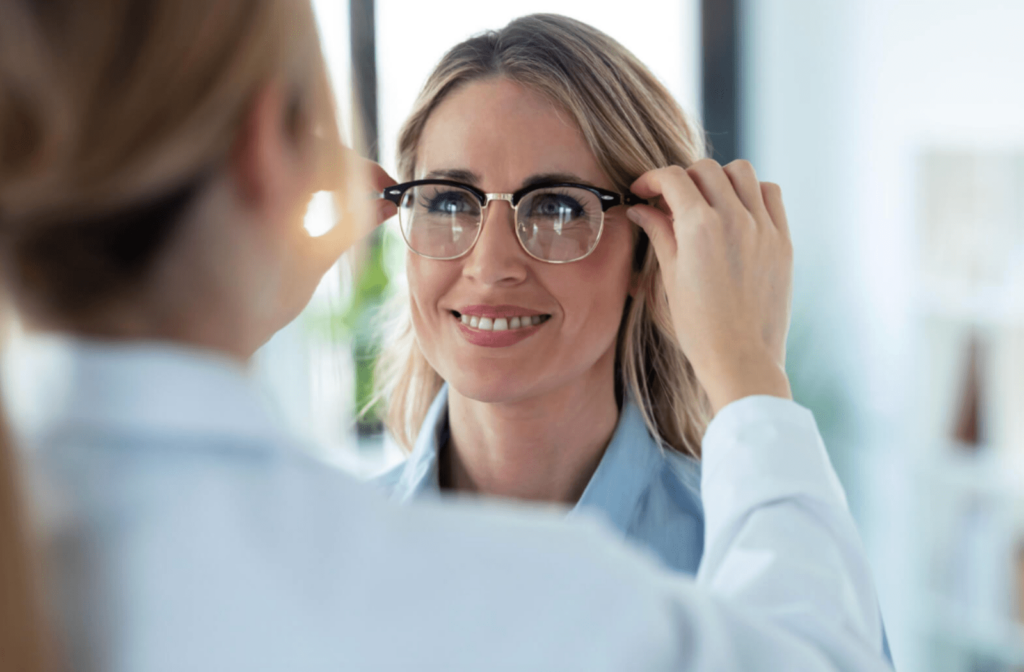
Temple Length and Pupillary Distance: Fit Factors You Should Know
Get Temple Length Right
The temples are the long arms of your glasses that go behind your ears. If they’re too short, they’ll grip too tightly behind your ears, creating uncomfortable pressure that builds throughout the day. If they’re too long, your glasses will feel loose and keep sliding down your nose.
The temple tips, the small curved ends that wrap behind your ears, should rest gently and securely without pressing or pinching. When the length is right, your glasses stay in place naturally during everyday movement, including bending over, looking down at your phone, or exercising. Getting this measurement right is often what takes a pair of glasses from tolerable to truly comfortable.
What Pupillary Distance Means for You
Pupillary distance, or PD, refers to the measurement between the centres of your 2 pupils (the black centre of your eye). This number tells your optician exactly where to place the optical centre of each lens in your frame. When the lenses are centred correctly over your pupils, your vision is clear and comfortable.
When your PD is off, even by a few millimetres, you might experience blurry vision, eye strain, or a feeling that something just seems slightly wrong, even though your prescription is accurate. This is especially noticeable when you look straight ahead or focus on objects at a distance. A professional measurement from our eye care team gives you the most accurate result and helps make sure your lenses are doing exactly what they’re supposed to do.
When to See an Eye Doctor for a Glasses Fitting
If your glasses are causing discomfort, regularly sliding out of place, or leaving pressure marks on your skin, these are all signs that a professional fitting can help. These issues don’t usually resolve on their own, and trying to bend or adjust frames yourself can cause damage that affects both the fit and the frame’s structural integrity. If something breaks or warps in the process, knowing where to get your glasses fixed by a professional can save you from needing a full replacement.
Getting a professional fitting also means you’re getting personalized attention for your specific face shape, skin sensitivity, and lifestyle needs. Someone who wears glasses while playing sports has different fit priorities than someone who works at a desk all day. Our eye care team takes all of that into account when helping you choose and fit your glasses.
Get a Professional Fitting at Maple Ridge Eye Care
Glasses that fit well make a real difference in how you see and feel every day. Whether you’re experiencing discomfort with your current pair or starting fresh with a new prescription, we’d love to help. Book a fitting today!