
Nearsightedness is common in school-aged kids, and it’s showing up at younger ages than it did a generation ago. After an eye exam confirms your child has it, you’ll need to decide how to correct it. You may have more options than you think, and some can do more than sharpen distance vision.
Before you choose myopia lenses, consider your child’s age, prescription, daily habits, and budget, then talk with your optometrist about whether single-vision glasses, myopia control lenses, contact lenses, or low-dose atropine drops suit your child.
What Myopia Means for Your Child’s Vision
With myopia, your child can read a book without trouble, yet the whiteboard across the classroom looks fuzzy. That’s why it’s also called nearsightedness.
It usually happens when the eyeball grows a little too long from front to back. Light then focuses just in front of the retina, which is the light-sensitive layer at the back of the eye.
Myopia often starts around age 6 or 7. And because kids’ eyes grow along with the rest of them, their prescription can climb year after year.
Kids don’t always mention it. Many assume everyone sees the way they do, so watch for a few of these signs:
- Squinting at the TV or the board
- Holding tablets and books very close
- Rubbing their eyes often
- Complaining of headaches after school
Types of Lenses for Myopia
Most families start with glasses, which come in 2 main designs. Contact lenses and eye drops are also available for some kids.
Single Vision Lenses
Single vision lenses have 1 prescription across the whole lens. They correct blurry distance vision so your child can see the board and the TV clearly again. They don’t slow down how fast myopia progresses, though.
For years, these were the standard choice. That’s changing as more optometrists recommend myopia control and start it at lower prescriptions.
Myopia Control Glasses
Myopia control lenses look much like regular glasses on your child’s face. A clear centre keeps vision sharp for reading and play. Tiny lenslets around that centre send a signal to the eye that can help slow its growth.
You may hear about brands like Stellest and MiYOSMART. Start early if you can, since myopia tends to keep progressing until about age 21, and an earlier start can give these lenses more time to work.
Contact Lenses and Eye Drops for Myopia
Glasses aren’t the only path. Some families prefer contacts or drops, especially for kids who play sports or feel self-conscious in frames. Here’s what you can choose from:
- MiSight daily soft contact lenses are designed for kids. Your child puts in a fresh pair each morning and throws them out at night.
- Ortho-k lenses are worn overnight and gently reshape the cornea, the clear front surface of the eye, so many kids can see clearly during the day without glasses.
- Low-dose atropine eye drops go in at bedtime and may help slow how fast myopia progresses.
Each option comes with its own routine. Pick one your child can stick with day after day.
What to Consider Before Choosing Myopia Lenses
A few practical details can help you narrow things down.
Your Child’s Age and Prescription
Younger kids’ eyes tend to change faster, which is one reason your optometrist may suggest starting myopia control early. Some lenses also have age guidelines, so what suits a 7-year-old may not suit a teenager.
Your child’s prescription matters too. Astigmatism, which happens when the cornea or the lens inside the eye is irregularly shaped, can limit which lens designs will work.
Lifestyle and Cost of Myopia Lenses
Look at how your child spends their day. If they log hours on screens and homework, their eyes are doing a lot of close-up work, and more near work is linked to faster myopia progression in kids.
Build some time outdoors into the week as well. It may help protect their eyesight alongside whatever lenses you choose. Think about comfort and handling. Contacts need clean hands and a consistent routine, so younger kids may need your help at first.
Then check the cost. Myopia control is an ongoing plan, so add up replacement lenses and follow-up visits over a few years, and ask your vision plan what it covers.
How Your Optometrist Can Help
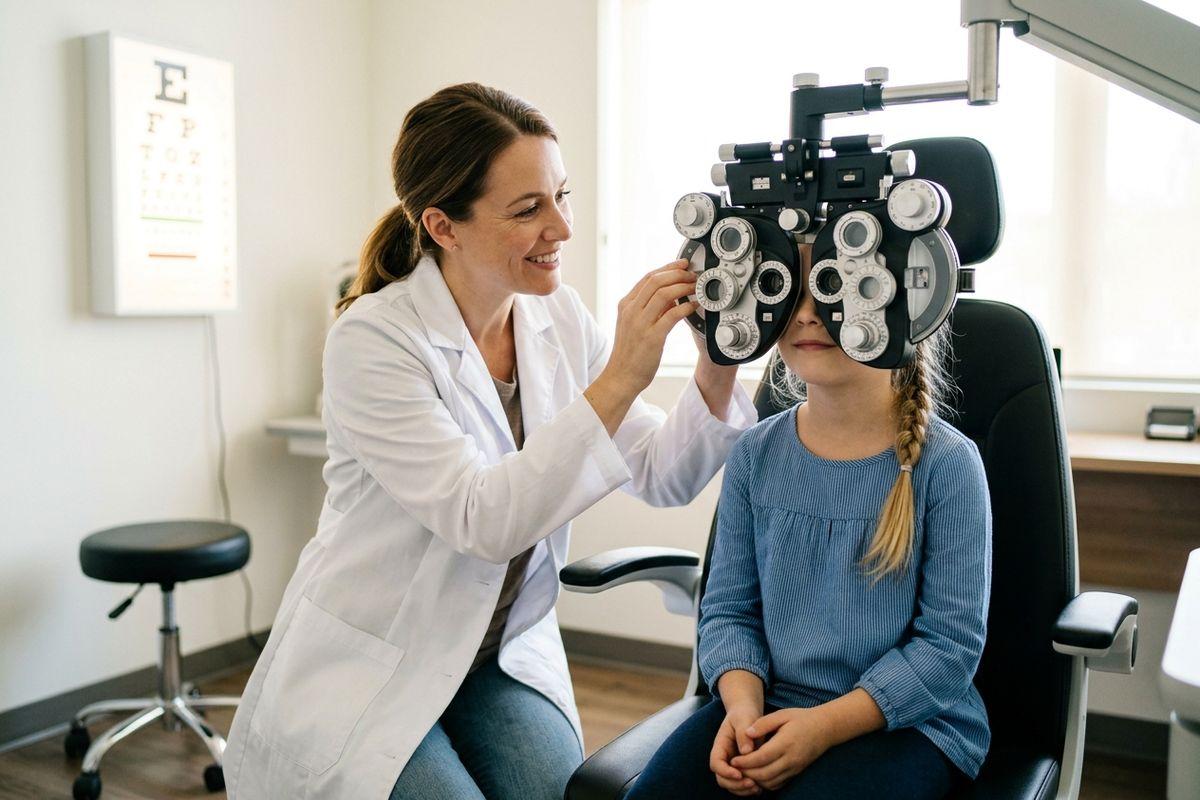
A full eye exam measures how much your child’s myopia has changed since the last visit. It also shows whether it’s progressing quickly or holding steady, and your optometrist can use that information to recommend options that suit your child.
School-aged kids should have an eye exam every year. If your child starts a myopia control plan, we may want to see them more often so we can check how the lenses are working and adjust the plan as their eyes change.
Start Your Child’s Myopia Plan with Confidence
Choosing myopia lenses gets easier once you know how your child’s eyes are changing. At Maple Ridge Eye Care, we’ll walk you through each option and answer your questions along the way.
There’s no better time to start. Book your child’s eye exam, and let’s talk about which lenses can work for your family.