
Your eyes depend on a steady film of tears to stay comfortable and clear. When that film breaks down, they can feel scratchy, tired, or raw by the end of a long day. Figuring out the cause is the first job, and dry eye therapy can bring relief once we know what we’re working with.
You likely have dry eye when your tears don’t hydrate your eyes well, either because you make too few tears or because the tears you make are low in quality. Both problems cause the same nagging discomfort, and both respond to care aimed at the tear film.
What Dry Eye Does to Your Tear Film
Tears aren’t just salt water. Every blink spreads a thin film across the front of your eye, and that film has 3 layers, each with its own job:
- A water layer that keeps the surface moist
- An oil layer that slows how quickly tears evaporate
- A mucus layer that helps tears cling evenly to the eye
When one layer runs low, the film breaks apart faster than your eyes can rebuild it. Dry patches form on the surface, and that’s where the burning and grittiness start.
Dry Eye Symptoms to Watch For
Dry eye doesn’t always feel dry, which throws people off. Watery eyes are just as common, because the surface floods itself to make up for tears that aren’t doing their job. All that reflex tearing can leave your vision blurry.
- Stinging or burning
- A gritty feeling, like sand under your eyelid
- Watery eyes with no obvious cause
- Sensitivity to bright light
- Tired, scratchy eyes by mid-afternoon
Symptoms tend to build through the day instead of arriving all at once. If yours get worse after a long stretch at work, mention that timing at your next exam.
When Contacts Feel Uncomfortable
Contacts sit right on your tear film, so they often give the first hint that something’s off. Lenses that feel fine in the morning and sore by lunch point toward dryness.
Watch for redness, mild soreness, or the urge to take your lenses out early. And tell us if you can’t wear contacts through a full day the way you used to, since a different lens material or replacement schedule can sometimes make wear more comfortable.
What Contributes to Dry Eyes
Plenty of ordinary things leave your eyes short on moisture. Tear production tends to drop as we get older, and hormonal changes can lower it further, which is why dry eye becomes more common after 50.
Medications can lower that supply further, including some allergy pills, blood pressure treatments, and antidepressants. Rheumatoid arthritis and thyroid disease reach the tear glands as well, so mention your health history at your exam.
Screens cause the trouble a different way. You blink less when you’re locked in on a phone or monitor, so the tears you have evaporate before they get replaced. That’s part of why digital eye strain and dryness so often show up together.
The air around you does its own damage. Wind, forced-air heating, and woodsmoke strip moisture off the eye’s surface before you notice anything.

Conditions Sometimes Mistaken for Dry Eye
Not every red, irritated eye is a dry eye. Seasonal allergies can cause the same symptoms, which leaves people reaching for drops that never quite settle things down.
Trouble with the small oil glands along your eyelid margins can feel identical. Those glands clog, the oil layer thins out, and your tears evaporate too fast. Care for that looks different from care for allergies, so it helps to know which one you’re dealing with.
Simple Ways to Find Relief at Home
A few habits can settle mild dryness while you wait for your appointment. Try these:
- Drink water throughout the day so your body has what it needs to make tears
- Run a humidifier in rooms with dry air, especially overnight
- Follow the 20-20-20 rule and look at something 20 feet away for 20 seconds every 20 minutes
- Hold a warm compress against closed lids for a few minutes to loosen clogged oil glands
If these help a little but the discomfort keeps coming back, book a closer look. Prolonged dryness can irritate the surface of the eye over time.
How an Optometrist Can Help with Dry Eye
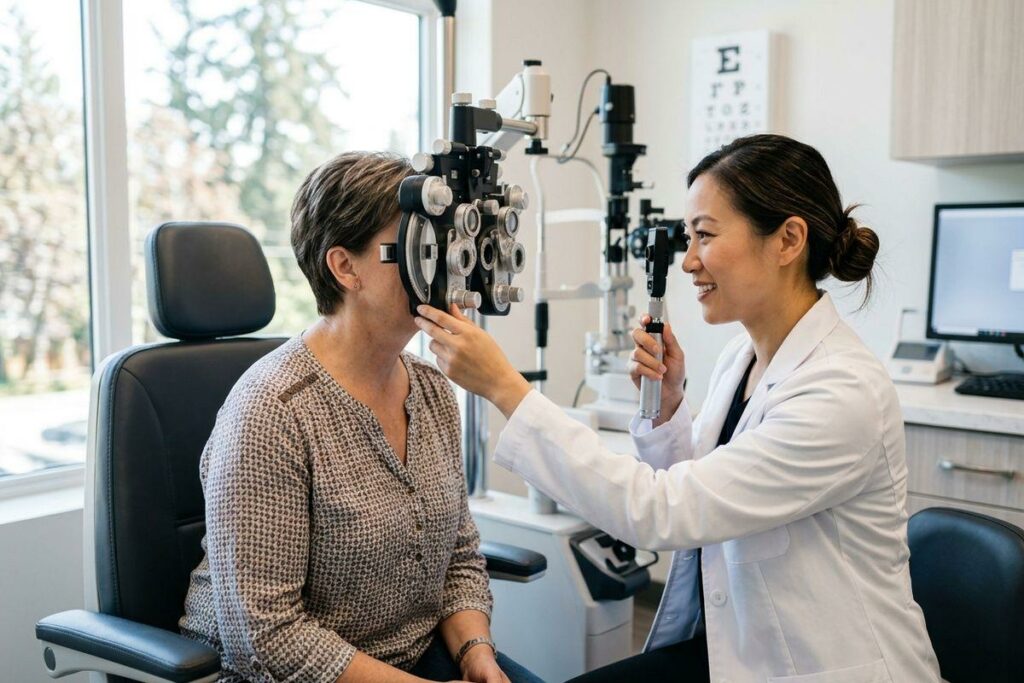
When home care isn’t enough, we can look at what’s driving your symptoms and build a plan around it. During an exam, we check how quickly your tear film breaks up and the condition of your eyelid glands.
Two people with dry eye can need very different care, so personalized attention matters. Drops are enough for some people, while others do better with treatment aimed at the glands themselves.
We can also suggest lens and coating options that keep your eyes more comfortable through screen time and driving.
Stop Guessing About Your Dry Eyes
Gritty, tired eyes don’t have to be part of your daily routine. Book an exam with Maple Ridge Eye Care, and we can sort out what’s behind the discomfort and talk through what may help.
Pick a time that works for you and bring your questions along. We’re ready with the answers you need!